The Church of San Giovanni in Valle
Visit the Church of San Giovanni in Valle and discover one of the oldest places of worship in Cividale!
Some sculpted fragments from the 6th–7th century suggest that the Church may have been built during the period of the Lombard Gastaldate.
We know for certain that the Church already existed by the mid-7th century, when members of the Lombard nobility were buried in large tombs in front of the current presbytery.
It is therefore likely that it served as a place of worship of Cividale’s elite from the early days of the Lombard presence, and that it was originally founded as a religious hub of an Arian Christian community.
The transformation from a place of worship within the Gastaldate to a monastic church took place between the late 9th and early 10th century.
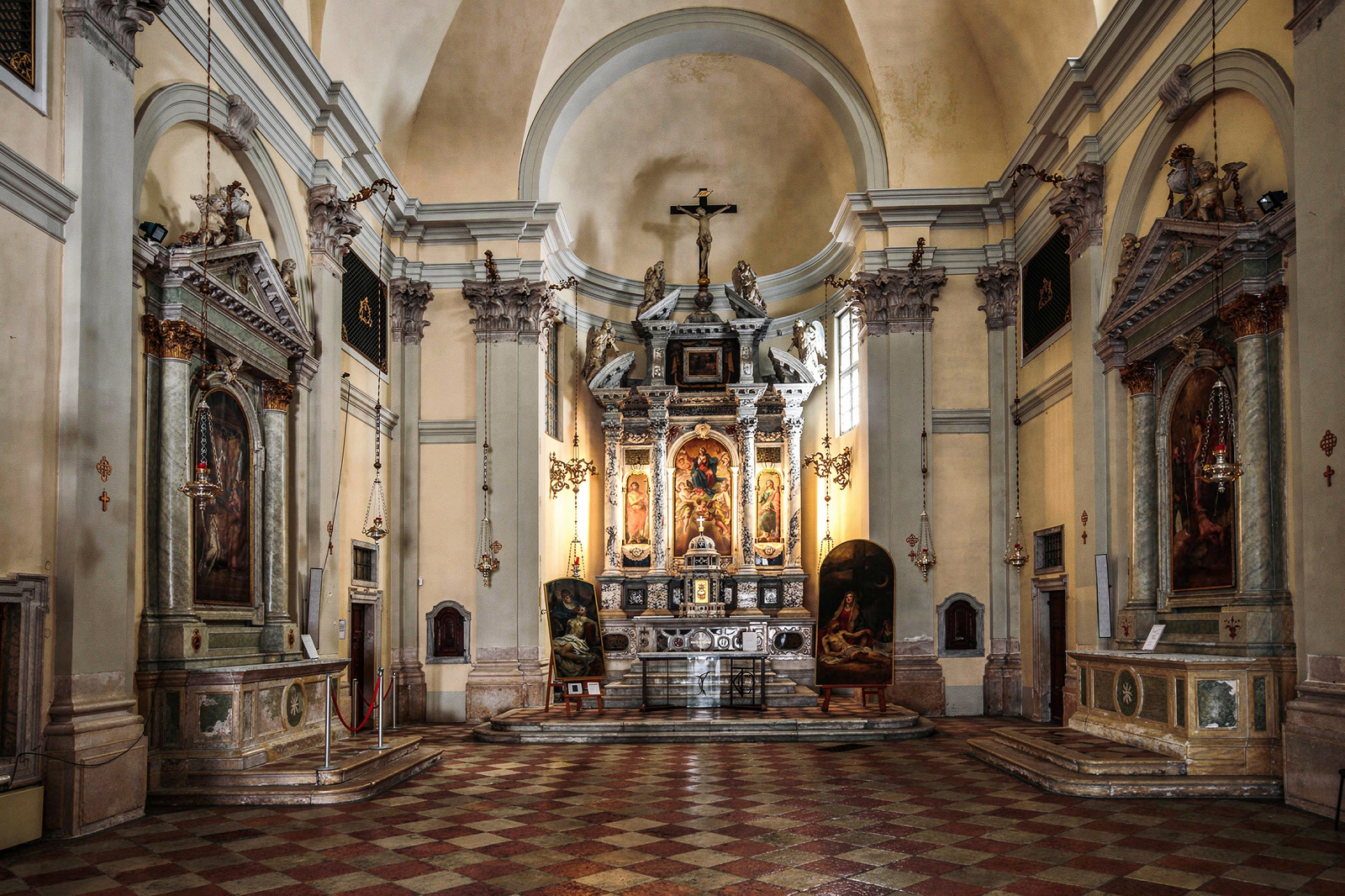
Very little is known about the original appearance of the Church of San Giovanni. The way it looks today is the result of many alterations made between the Middle Ages and the Renaissance, culminating in the major 18th‑century expansion that defined its current form.
Traces of the Church’s Earliest Layout
The limited excavation surveys carried out in the 1900s revealed only a few traces of the Church’s earliest layout and of its subsequent alterations over time.
Today, thanks to new archaeological research and soil layer analysis, we can begin to outline the transformations undergone by the building and identify four main architectural phases:
- The early medieval Church
- The 14th‑century Church
- The post‑medieval Church
- The 17th–18th‑century Church, which corresponds to the building as it stands today.
The Monumental Graves
As reported in the accounts by Lorenzo del Torre, a prominent canon and scholar from Cividale, in the course of repair works commissioned by the nuns after a lightning strike in 1751, an extraordinary find came to light inside the church.
Three Lombard tombs were discovered right in front of the altar steps, beneath the flooring. These were stone sarcophagi containing a fine set of burial items, placed inside small underground masonry chambers. Sources mention the presence of many small gold crosses among the rich burial objects, as shown by an 18th‑century print.
The type of graves and quality of the burial objects suggest a close parallel to the famous tomb of Duke Gisulfo, discovered in Piazza Paolo Diacono in Cividale, which also consists of a stone sarcophagus placed inside a small underground masonry chamber. Clearly, these were the graves of high‑ranking members of Cividale’s Lombard nobility.
The finds that have survived to the present day are now displayed at the National Archaeological Museum of Cividale.
The 17th–18th century Church
Between the late 1600s and the 1700s, the Church of San Giovanni in Valle developed into the appearance we see today through a series of works. The building was raised and the main portal was moved to the centre of the façade. The architrave of the new portal bears the inscription Anno Domini MDCXCIV (1694). The raising of the bell tower was completed in a later phase, while further works – completed in 1776 – included the construction of the sacristy next to the bell tower and the addition of a narthex, an inner porch situated at the Church entrance.
Works of Art Housed in the Church
The High Altar
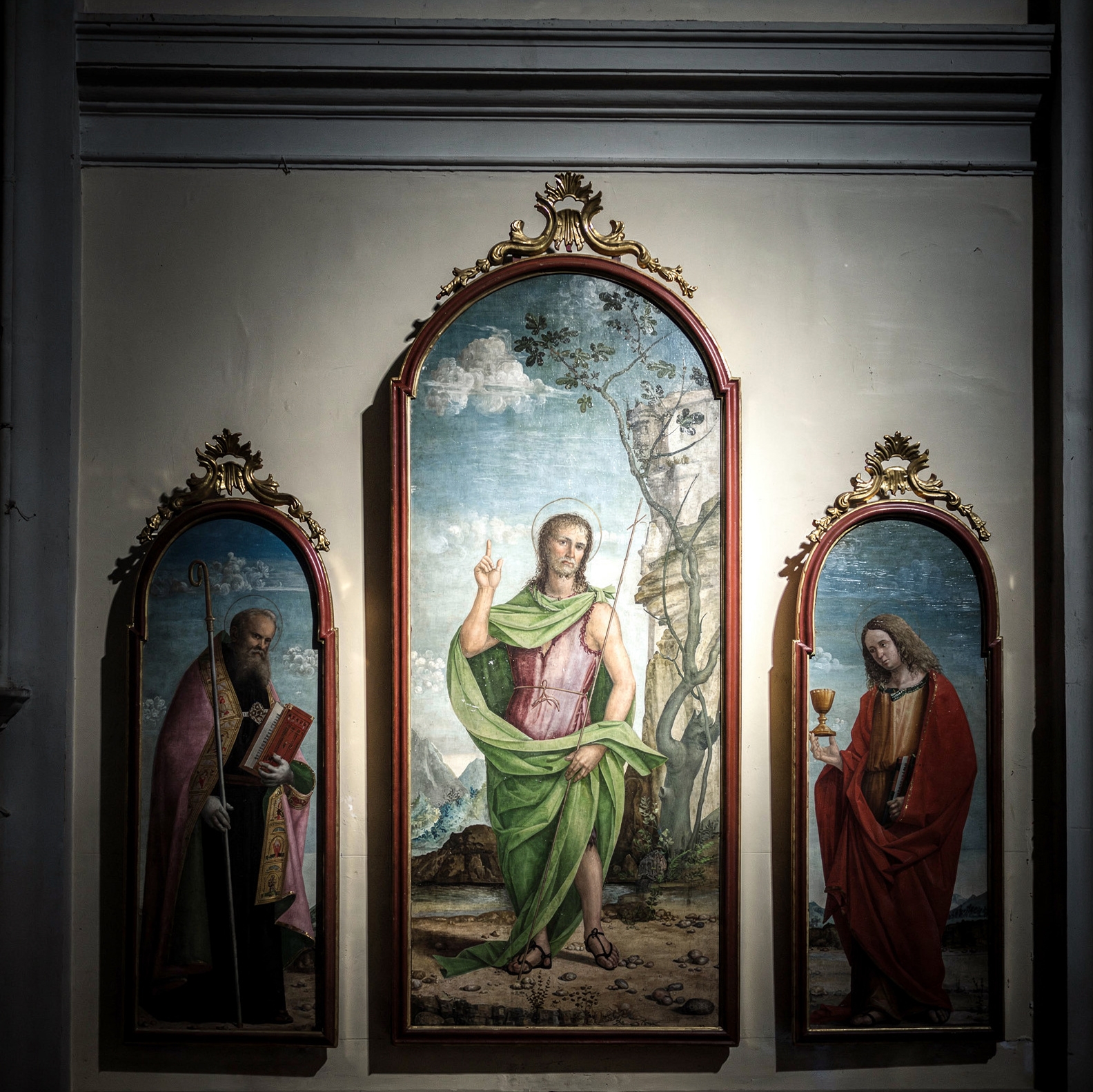
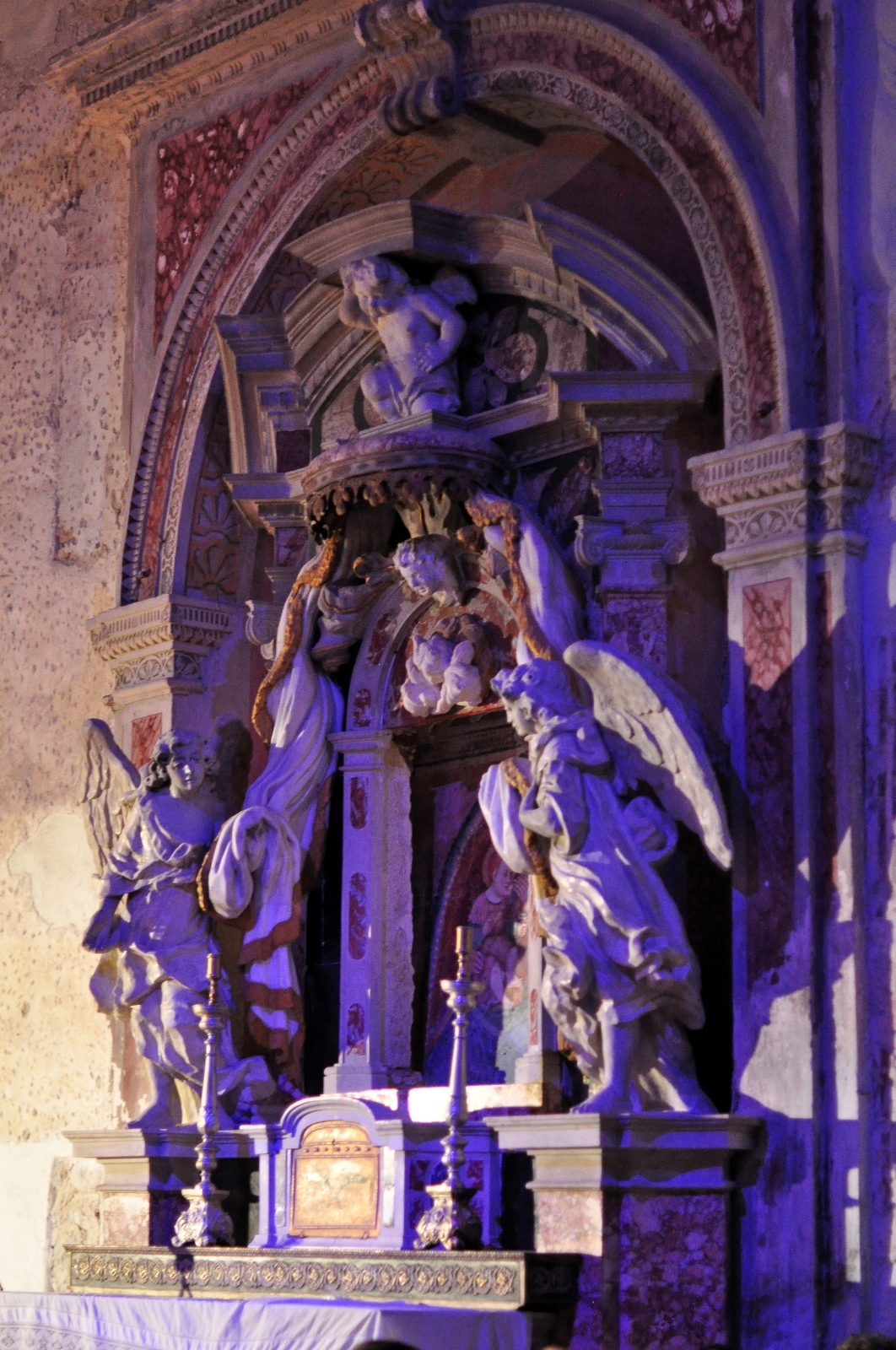
The grand high altar, completed in 1674 by the Venetian master Paolo Zuliani, was enriched with four angels carved by Antonio Comaretto da Gemona in 1700, and in 1750 with three paintings by Ercole Graziani (with the central panel depicting the Assumption, and side panels portraying Saint John the Baptist and Saint John the Evangelist). At the top, the cymatium houses a late 16th‑century Trinity, attributed by most scholars to Palma the Younger.
The Side Altars
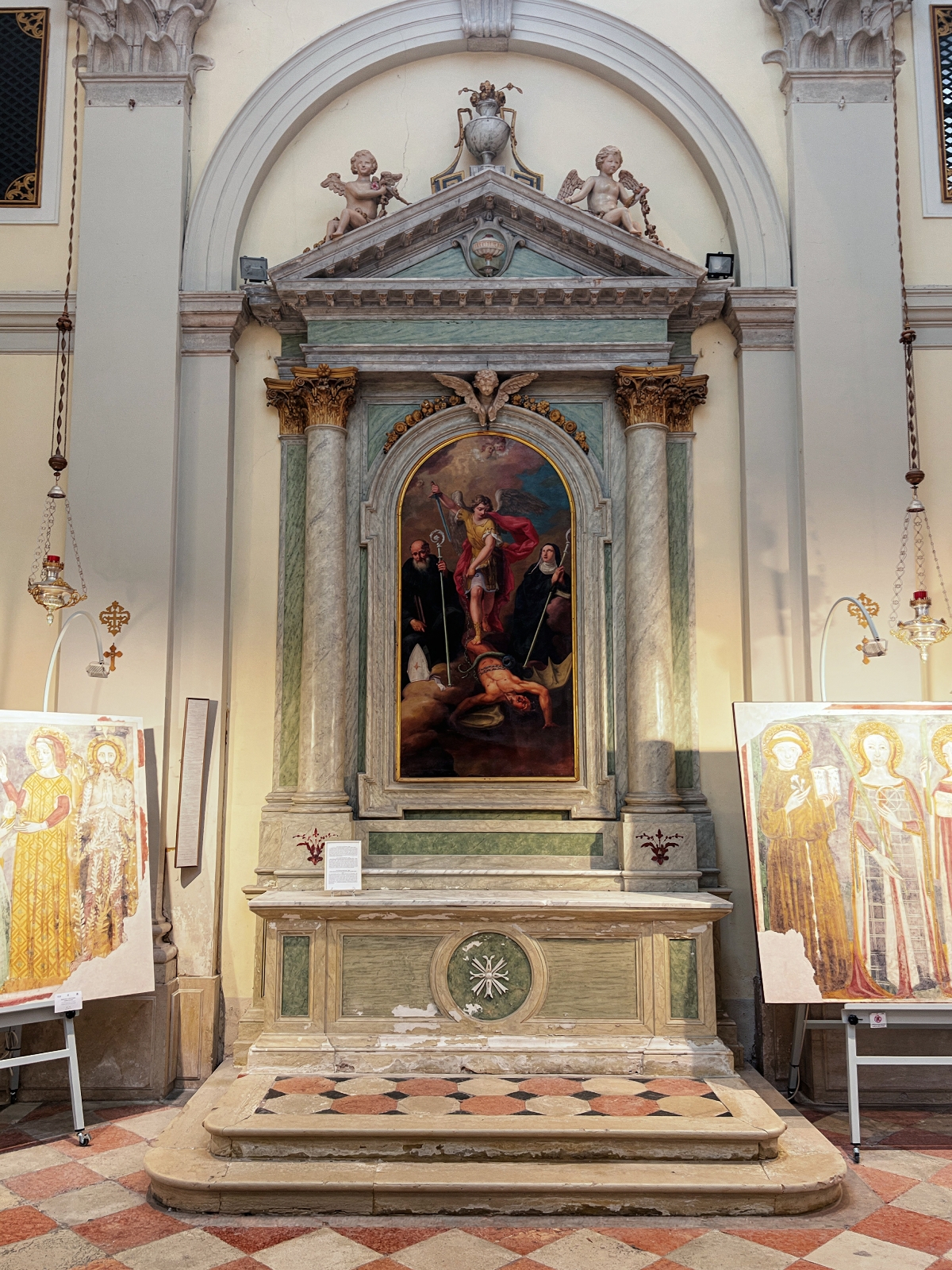
The side altars date back to 1817 and were made in imitation marble by Giacomo Vassalli from Lugano.
On the right, we can admire an altarpiece depicting Saint Michael the Archangel, Saint Benedict and Saint Clare painted by Piero Antonio Novelli (1729–1804), a follower of the great 18th‑century Venetian school.
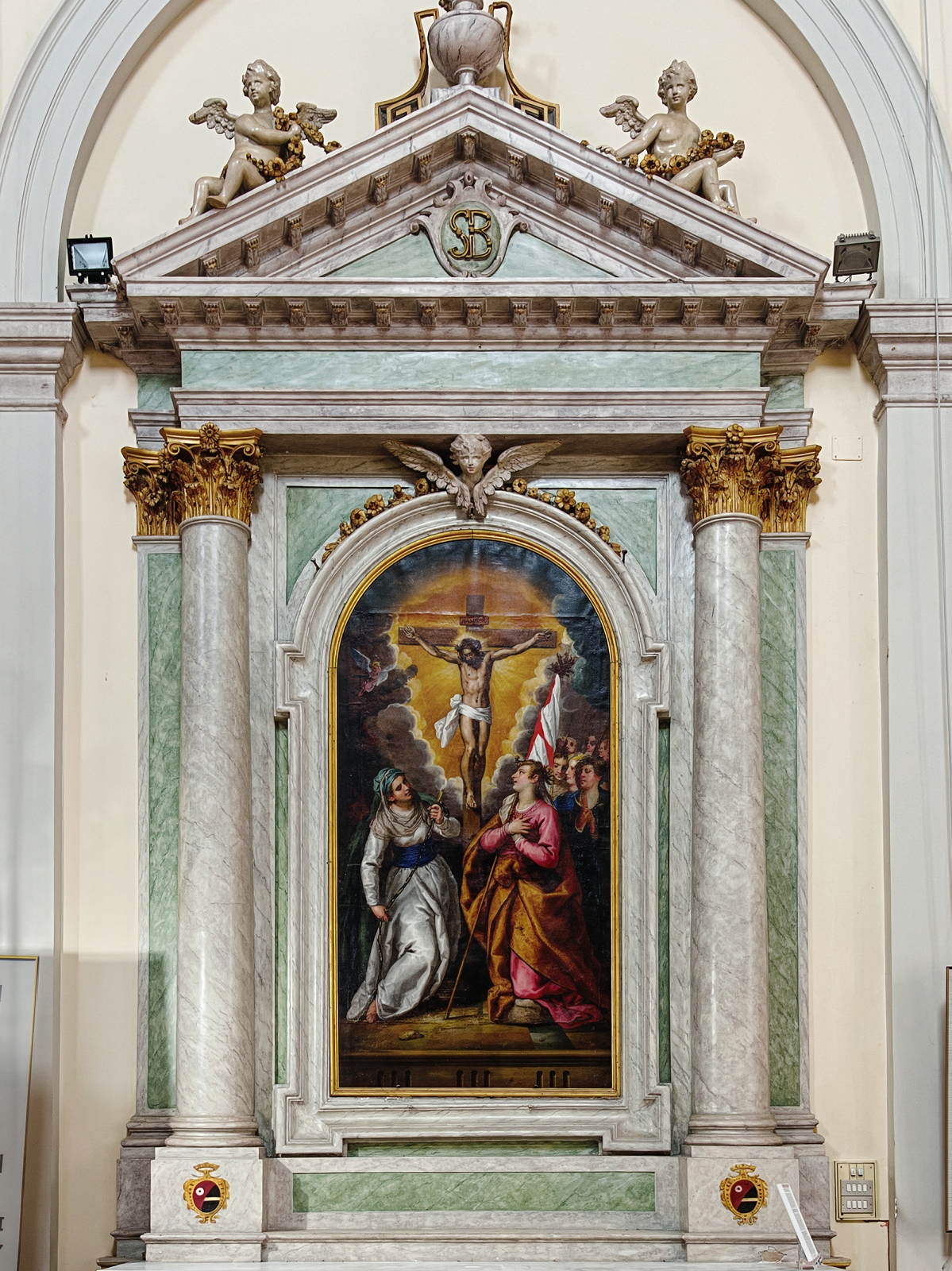
On the left, there is another altarpiece representing Christ Crucified between Blessed Benvenuta Boiani and Saint Ursula with her Companions, painted by Palma the Younger (1549–1628) and originally intended for the Monastery of Cella, some 80 km away.
The Fresco with Saint John the Baptist
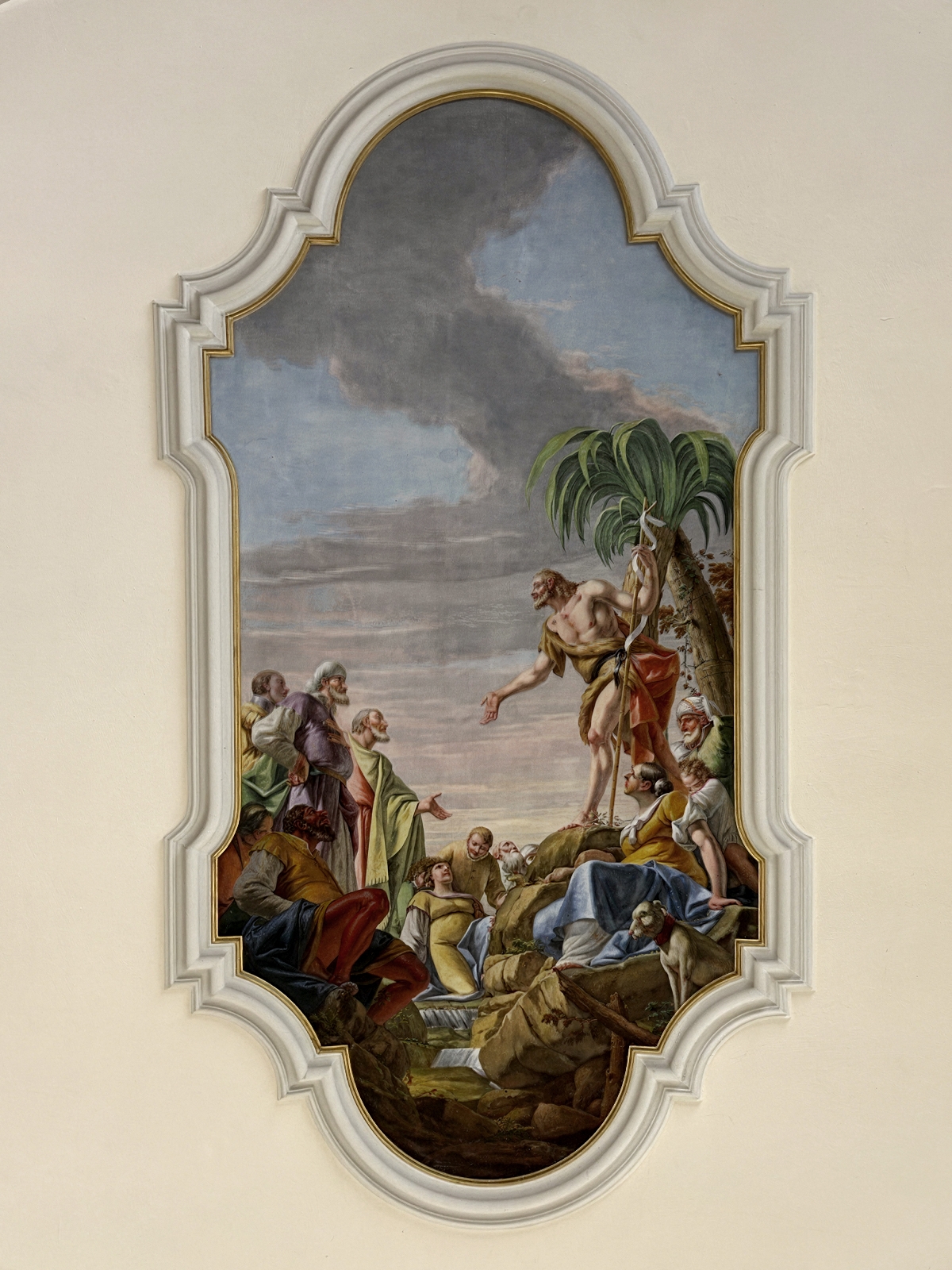
Alongside the architectural renovation, the decoration of the Church continued throughout the 18th century. Evidence of this is the fresco with Saint John the Baptist Preaching, painted by Giuseppe Diziani in 1771 and set within a stucco frame at the centre of the nave.
Jacopo Palma the Younger
The artistic legacy of Jacopo Palma the Younger (Venice, c. 1549–1628) in Cividale is extensive: his works are preserved in the Cathedral, in the Church of San Pietro ai Volti, and in the Church of San Giovanni in Xenodochio.
A Venetian painter of great influence between the late 16th and the early 17th century, and an heir to the eminent Venetian tradition, Palma the Younger dominated the artistic scene after Tintoretto. Responsible for a large body of work, he was celebrated for his mastery of portraiture, as well as for the educational purpose of his altarpieces.
Palma’s work is generally distinguished by a refined exploration of light: figures emerge from a darkened atmosphere, animated by sudden highlights that linger on carefully chosen details of the composition. His close attention to the physiognomic characterisation of his subjects – rendered with convincing naturalism – testifies to the maturity of his artistic vision.
Giuseppe Diziani
A prominent figure on the Venetian painting scene of the second half of the 18th century, Giuseppe Diziani (Venice, 1732–1803) learned his craft in the studio of his more famous father, Gaspare.
By the age of twenty‑nine, he was already a member of the Venetian painters’ guild. His late start as an independent painter was likely due to the length of his apprenticeship and to the fact that, for more than a decade, Giuseppe worked with his father on the many fresco commissions for grand mansions in Venice and on the mainland.
The Dizianis’ studio was one of the most renowned in Venice owing to their ability to adapt to the evolving tastes of their patrons and their frequent travels to Lombardy.
Gallery