Tempietto Longobardo
A Precious Treasure Chest of Art, History and Legend
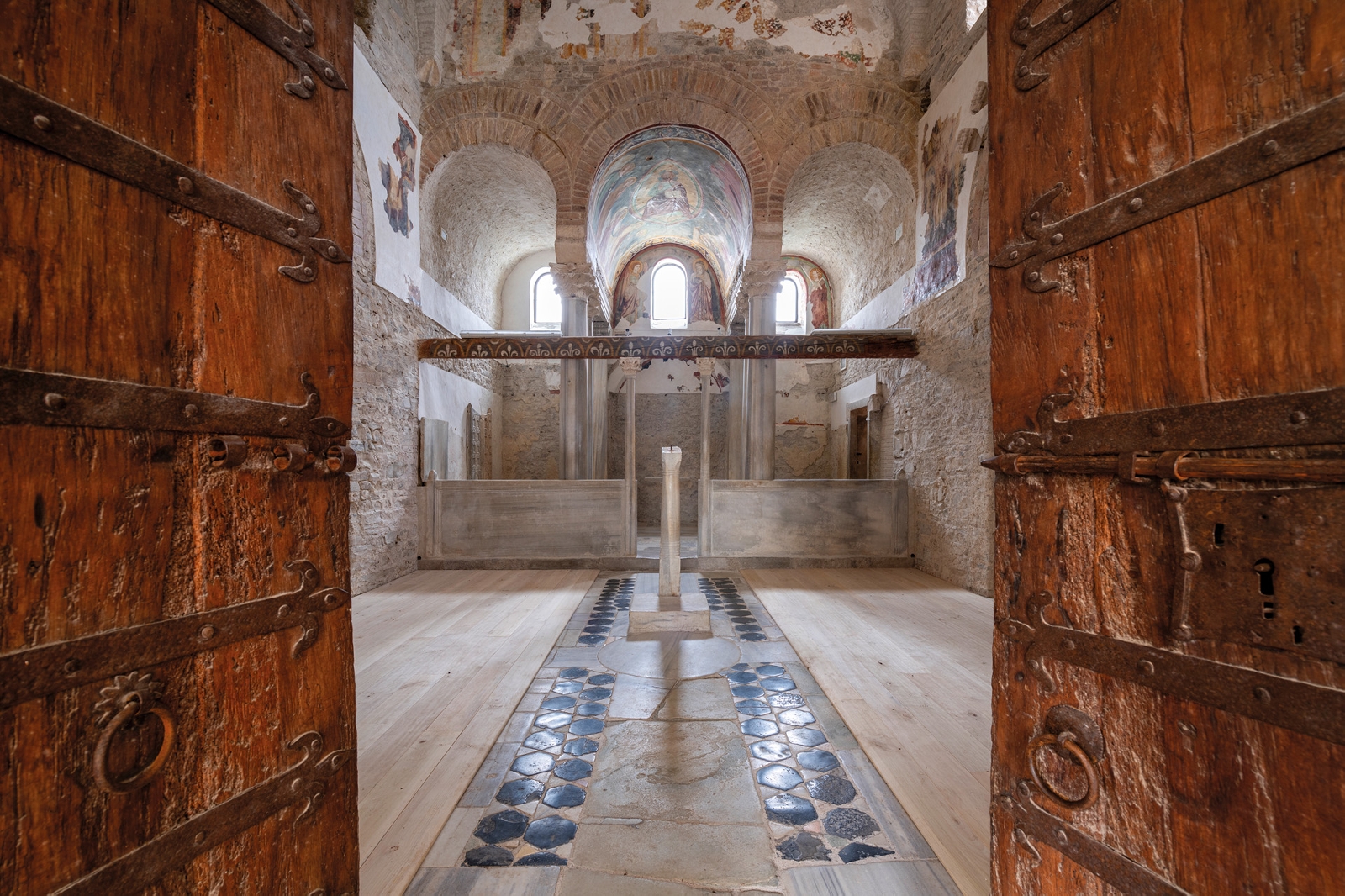
Designed and built by the Lombards during the second half of the 8th century, the Tempietto Longobardo regained its splendour in 2025 thanks to an extensive programme of careful restoration works.
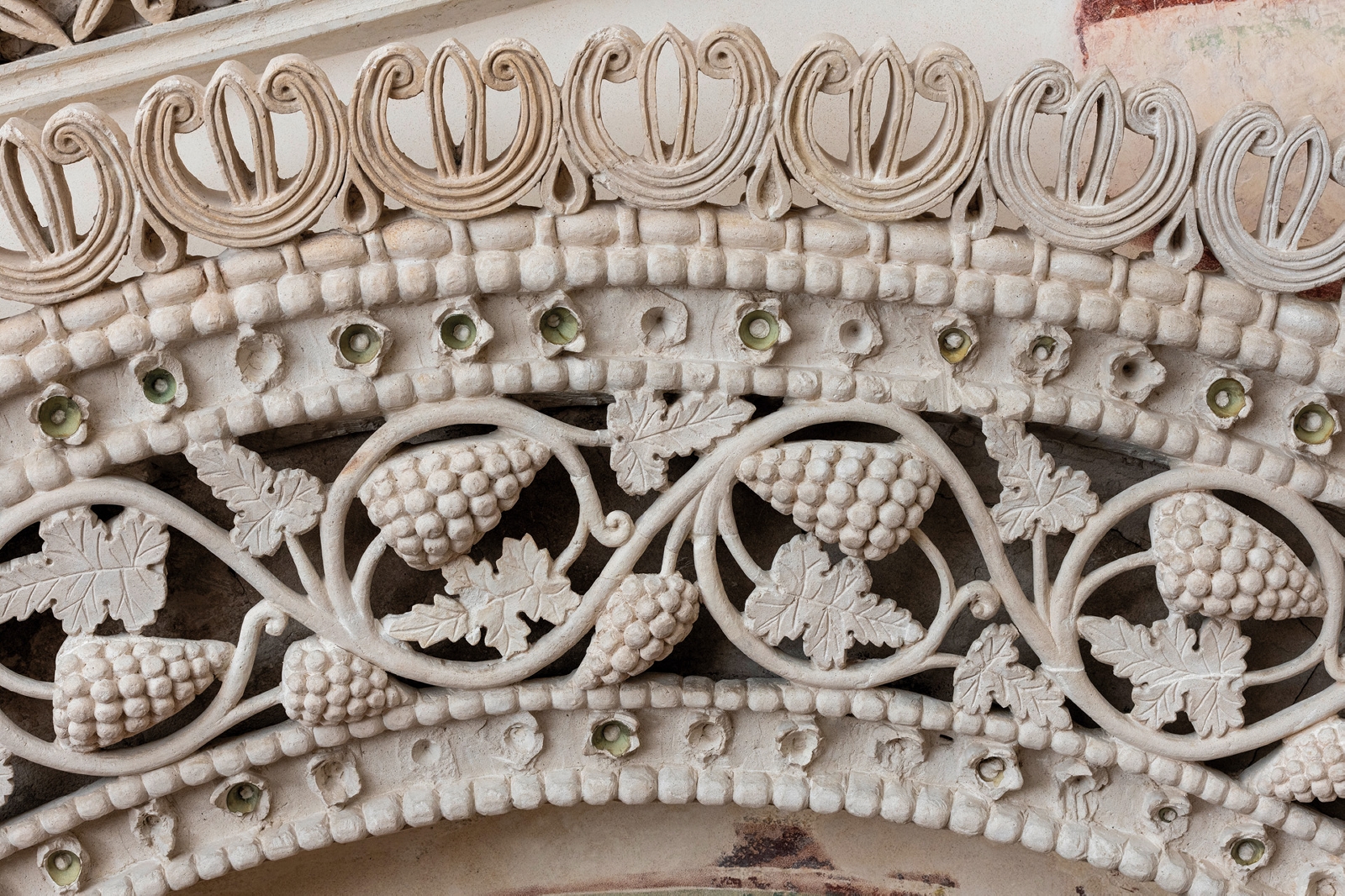
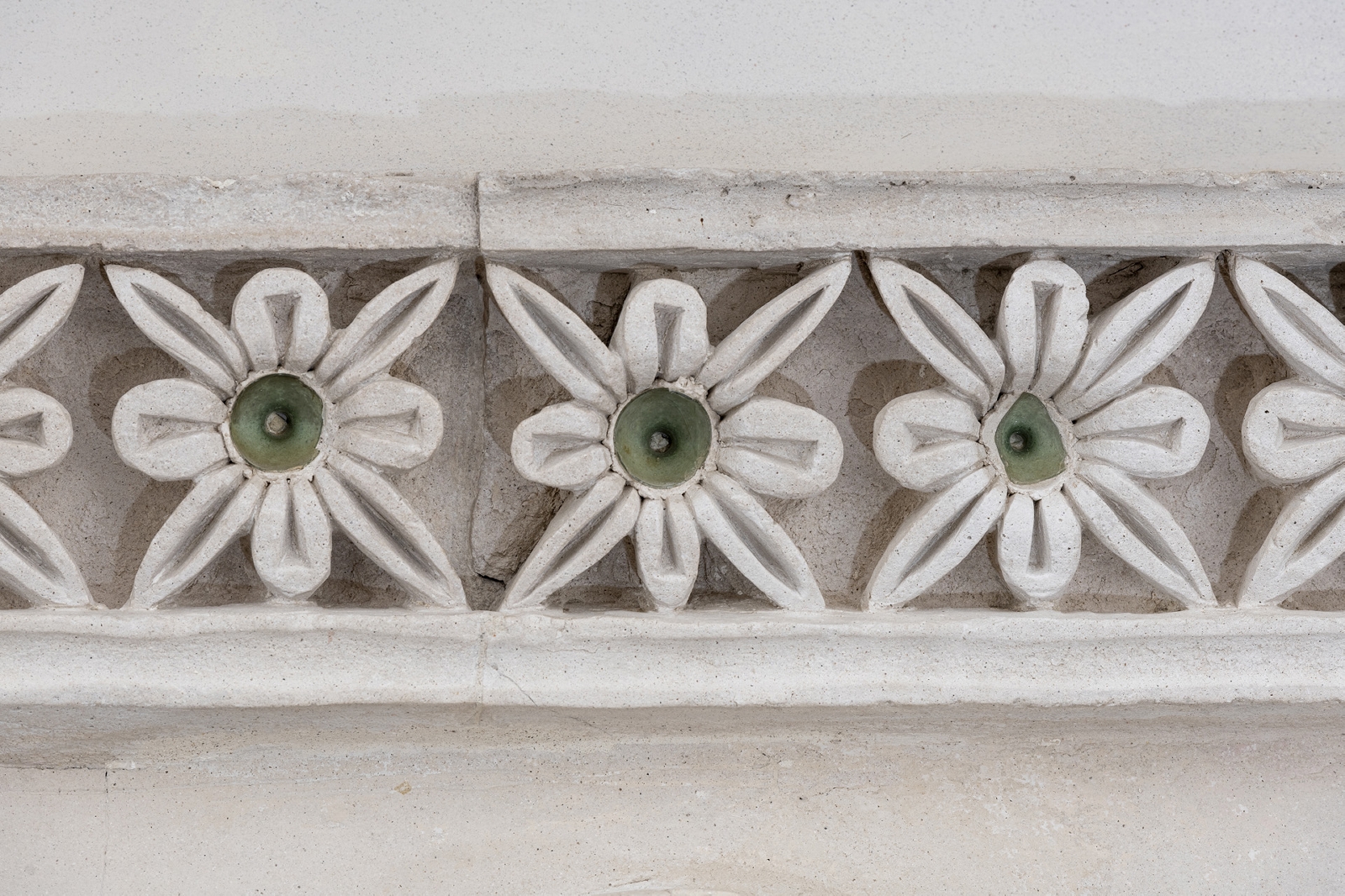
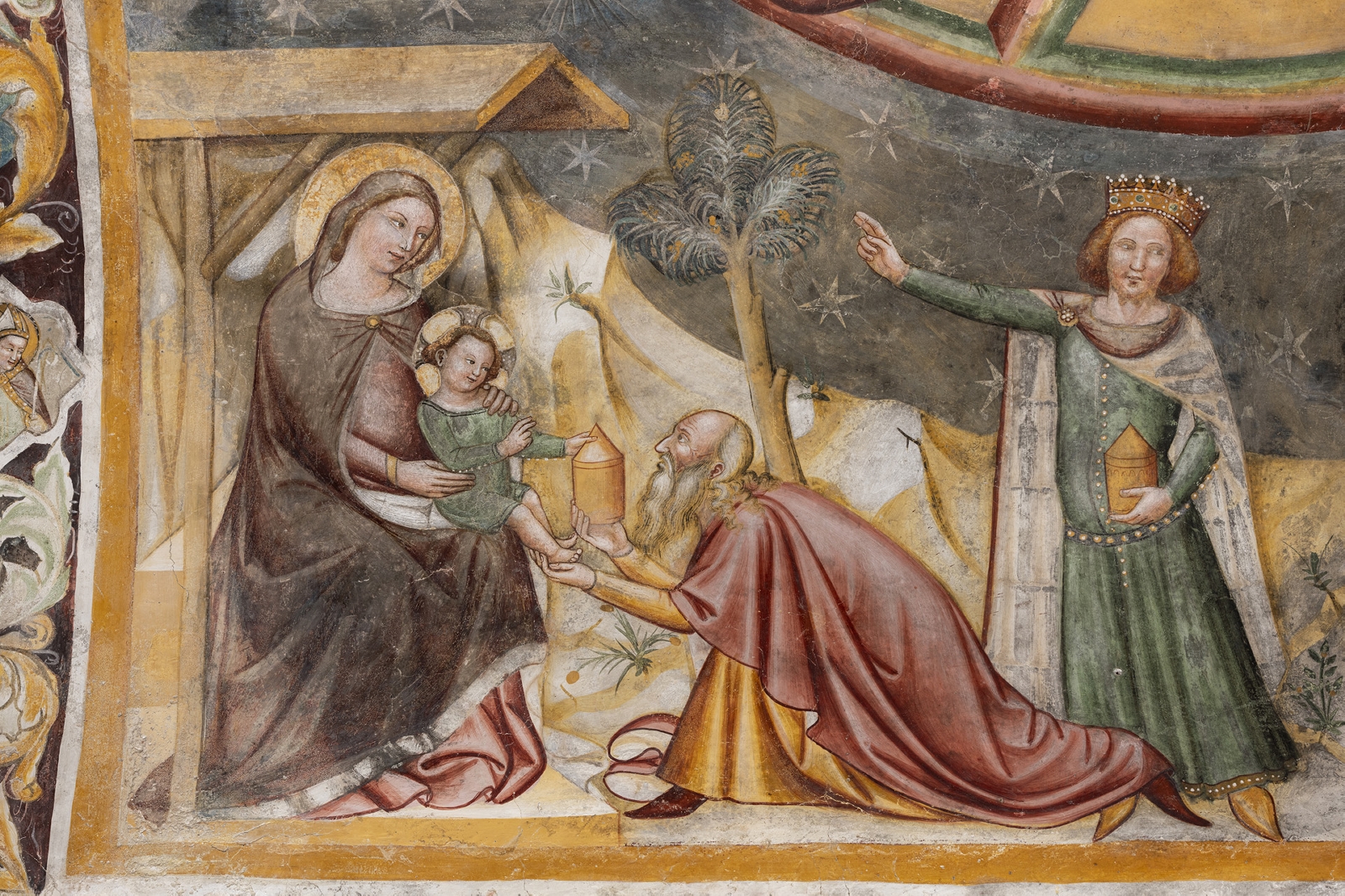
A UNESCO World Heritage Site since 2011, it brings together exquisitely crafted stucco decorations, elegant frescoes, refined architectural details and still unresolved mysteries. The Tempietto is a treasure chest of masterpieces, inviting visitors to explore it again and again through perspectives that are new each time.
An Important Legacy for Future Generations
The simple exterior design of this small building, almost overhanging the Natisone River, gives no hint of the treasures preserved within, which clearly reveal the prestige and authority of the elites who commissioned them over the centuries.
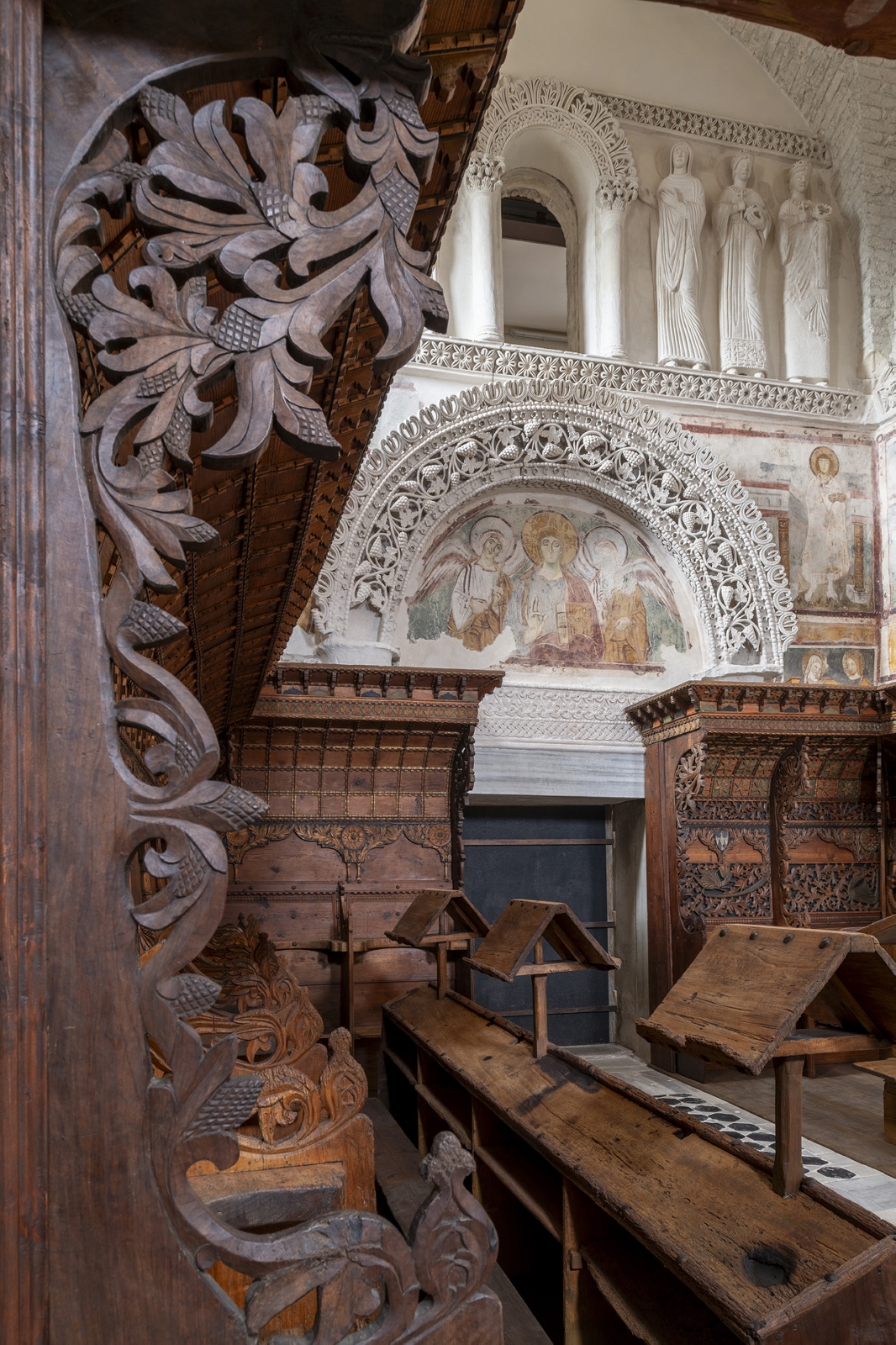
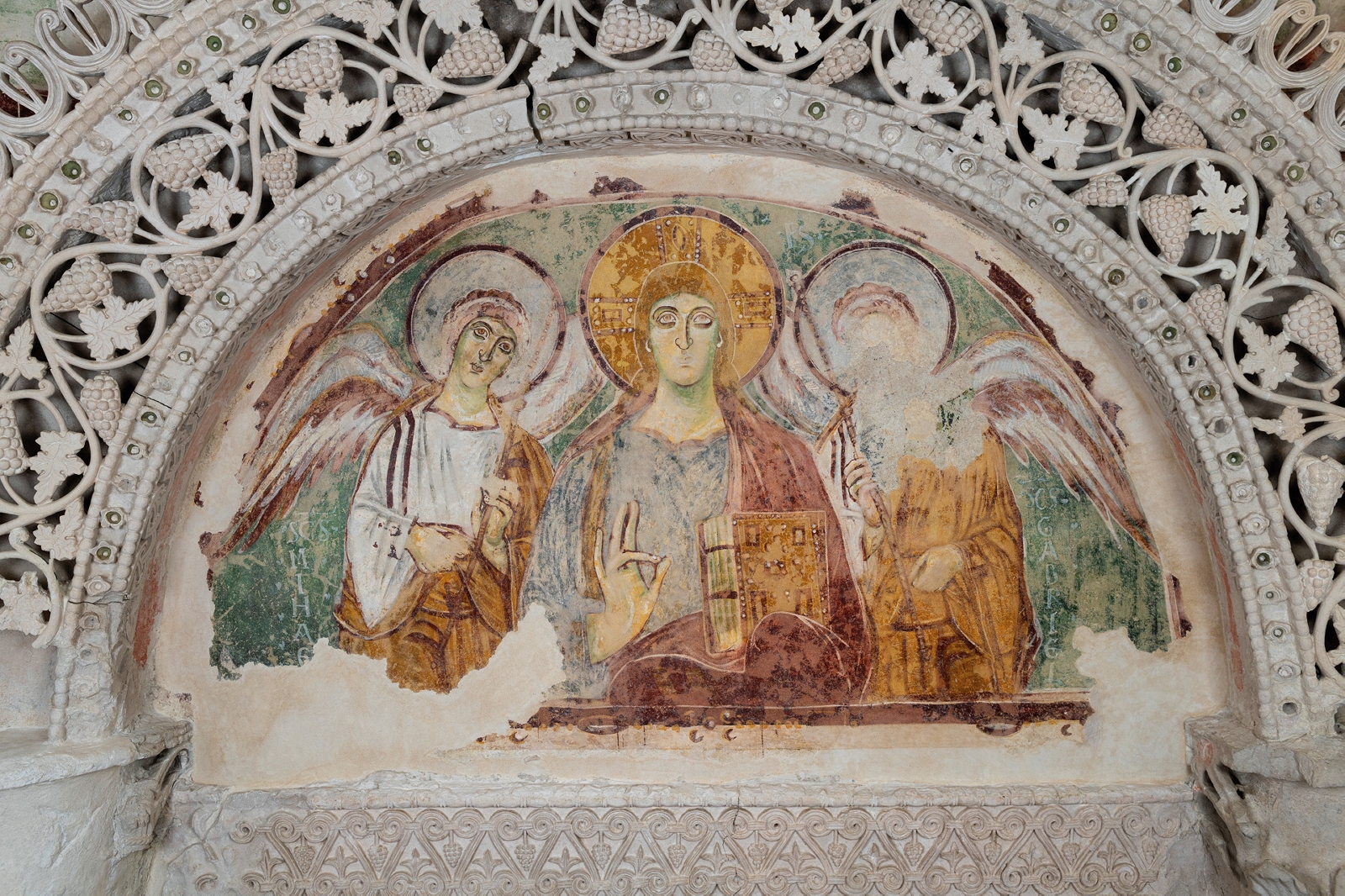
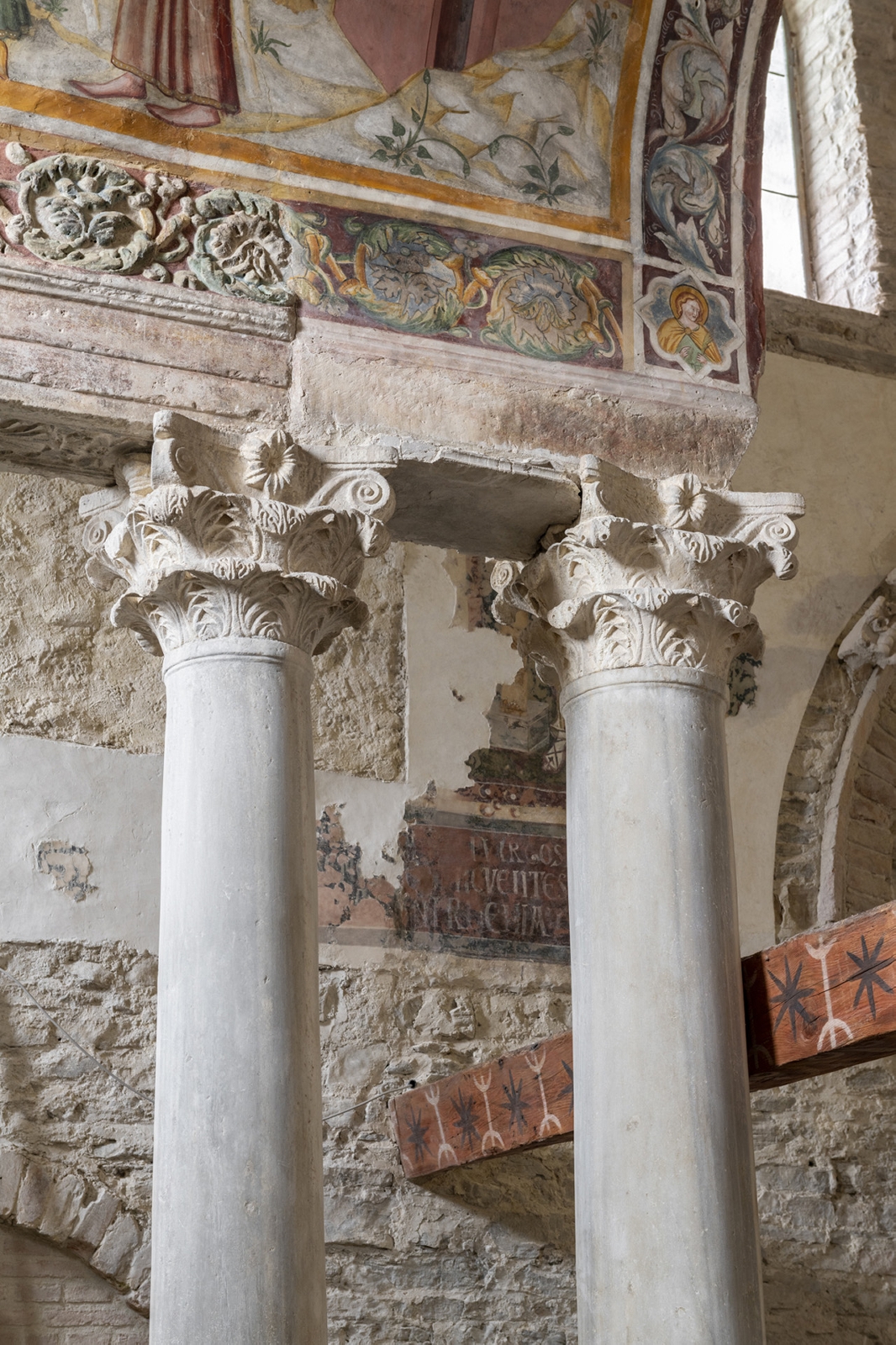
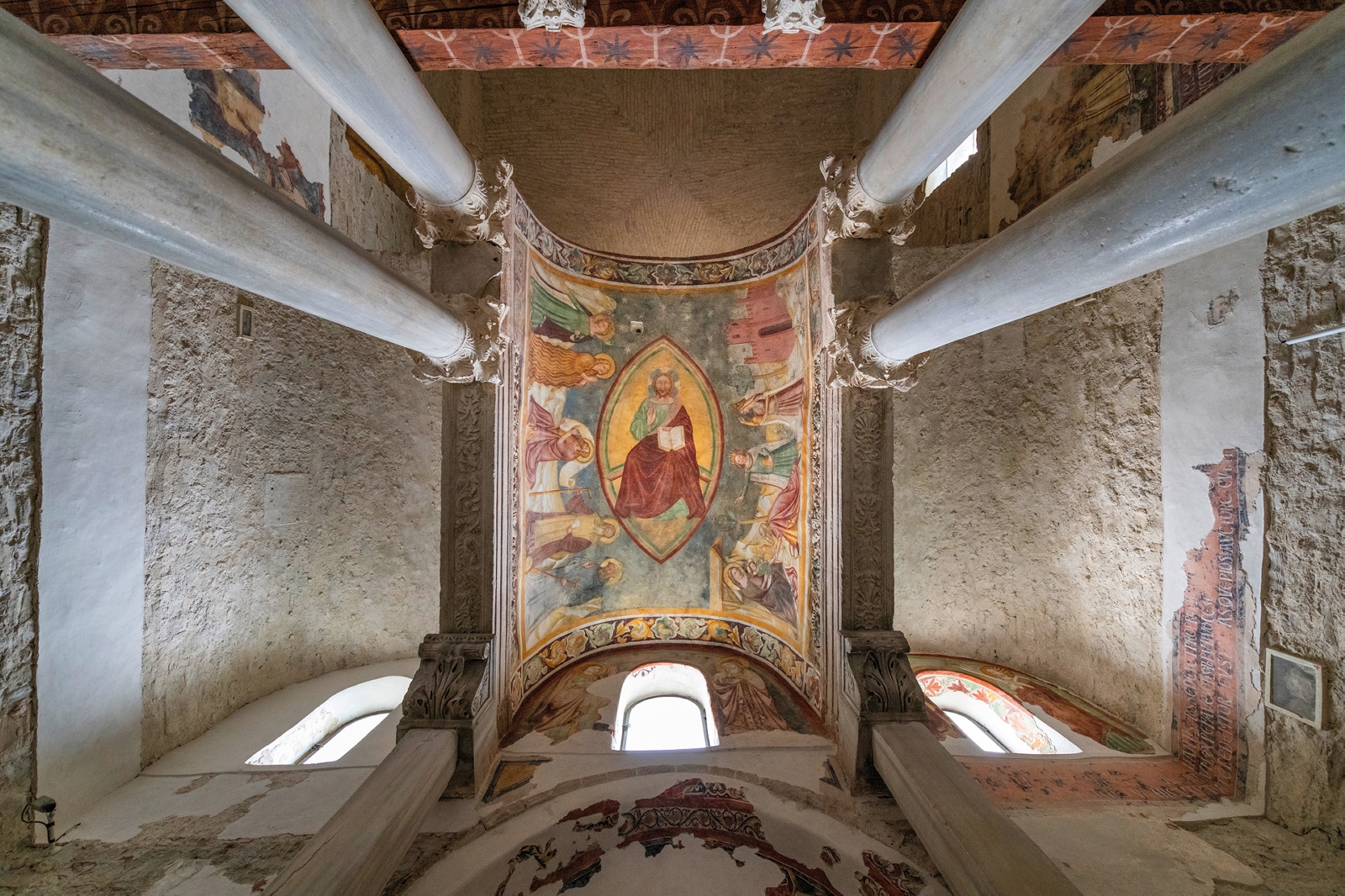
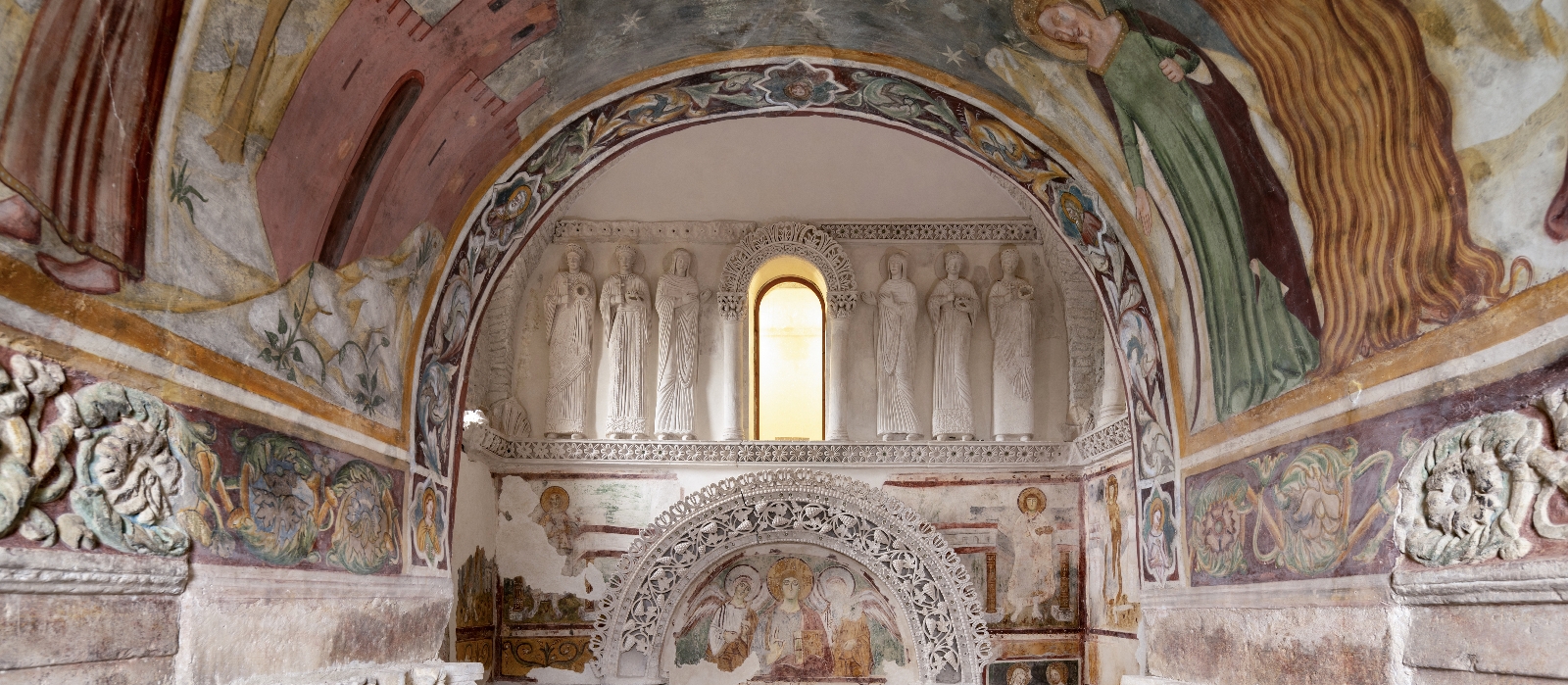
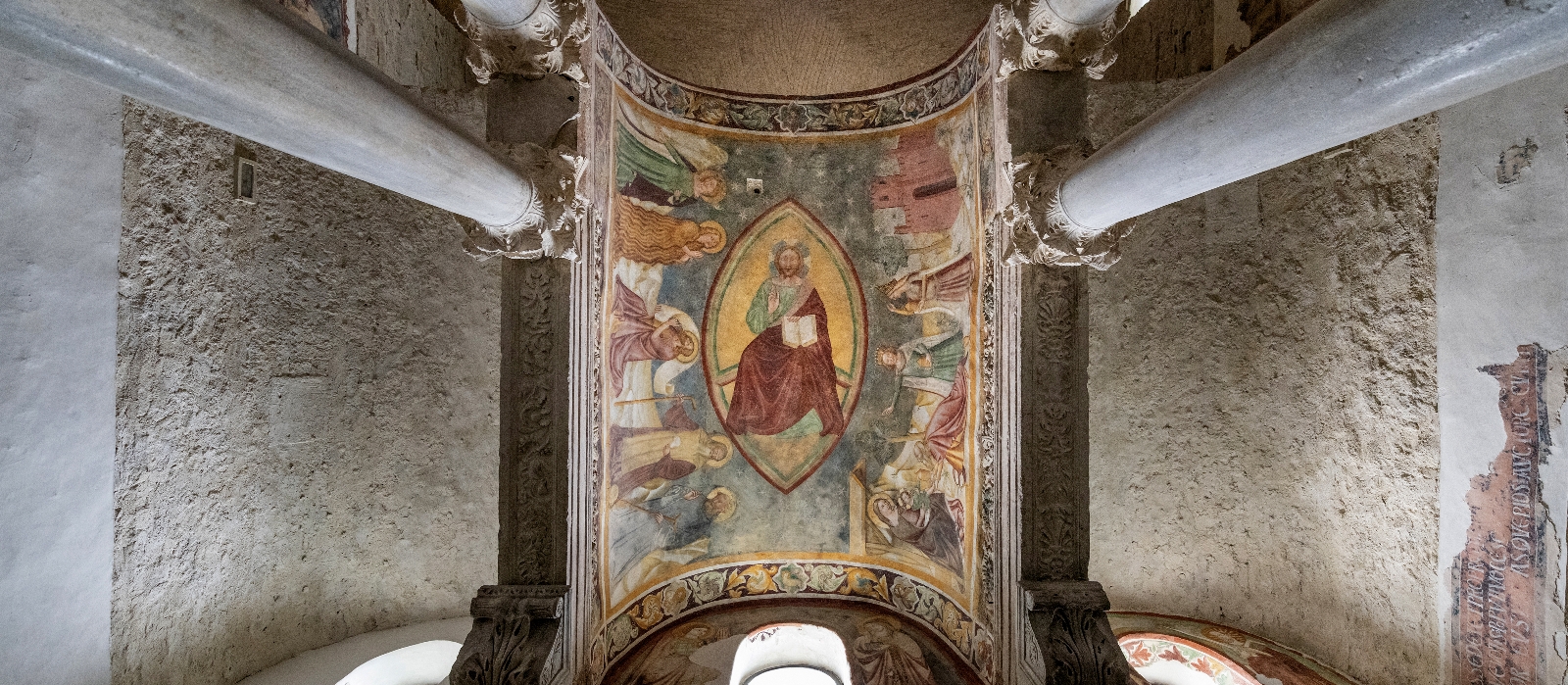
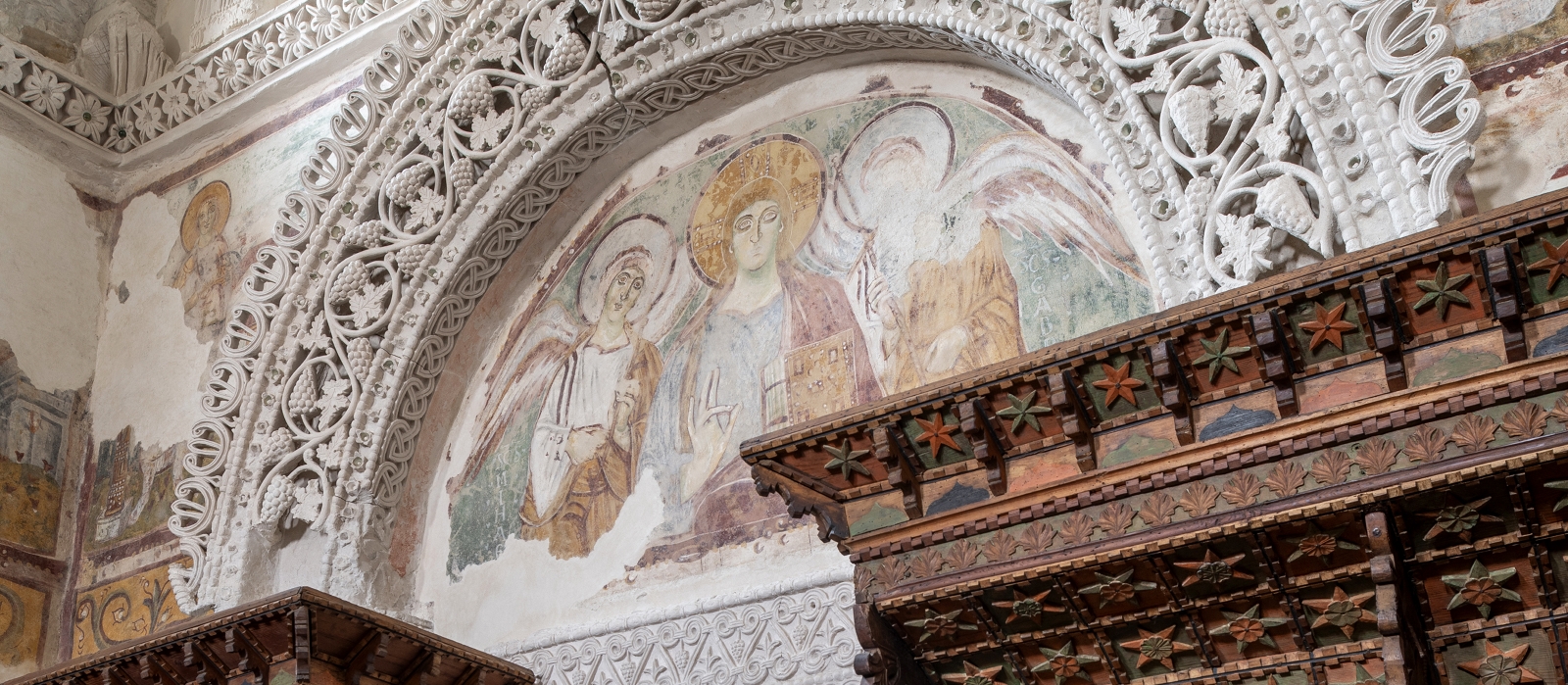
The building’s architectural solutions shape and expand the interior space in surprising ways. The refined stucco and fresco decorations, evidence of highly skilled craftsmen, are unique among the artistic landscape of Lombard Italy.
Video
Tempietto Longobardo: the Royal Palace Chapel of Cividale
“From an architectural point of view, the building stands between the West and the East, between past and future”
Prof. H. Torp, Il Tempietto Longobardo: la cappella palatina di Cividale
“From an architectural point of view, the building stands between the West and the East, between past and future.” With these words, in the 1950s, Professor Hjalmar Torp – art historian and the foremost expert on the Tempietto Longobardo – captured the essence of one of the highest artistic achievements of the Lombards in Italy.
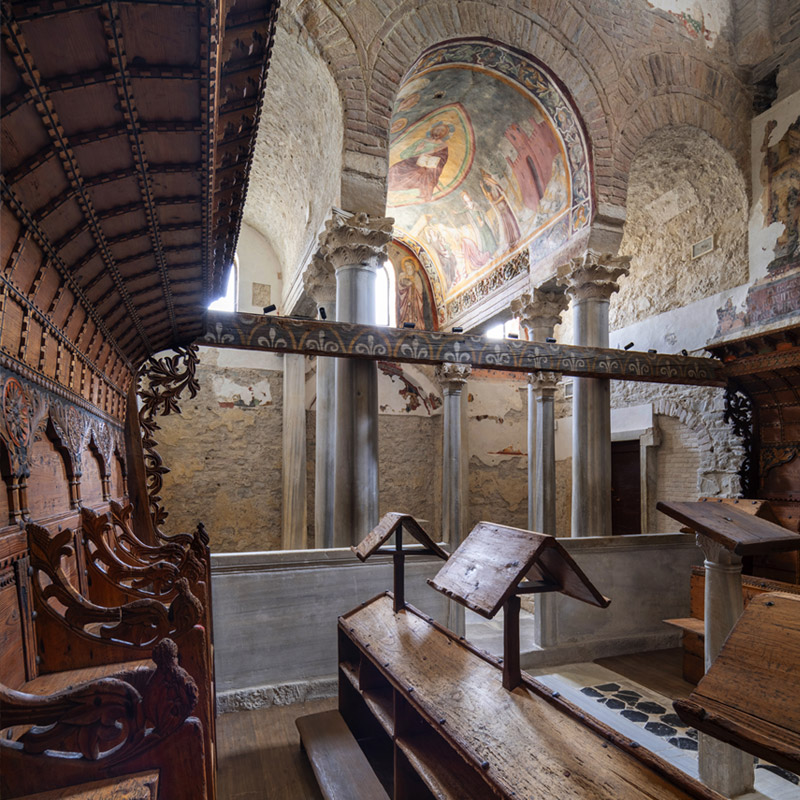
Built as a palace chapel within the perimeter of the Gastald’s residence, the representative of the Lombard King in Cividale, the Tempietto has undergone several renovations over the centuries, both structural and decorative. The interior, intimate yet majestic, brings together refined artistic and architectural expressions and bears witness to an extraordinary process of cultural exchange.
Unexpected and striking Early Medieval, Roman, Byzantine, Mediterranean, and Eastern influences place the Tempietto at the crossroads of East and West, past and future, preserving traditions from ancient times while anticipating key features of medieval art.
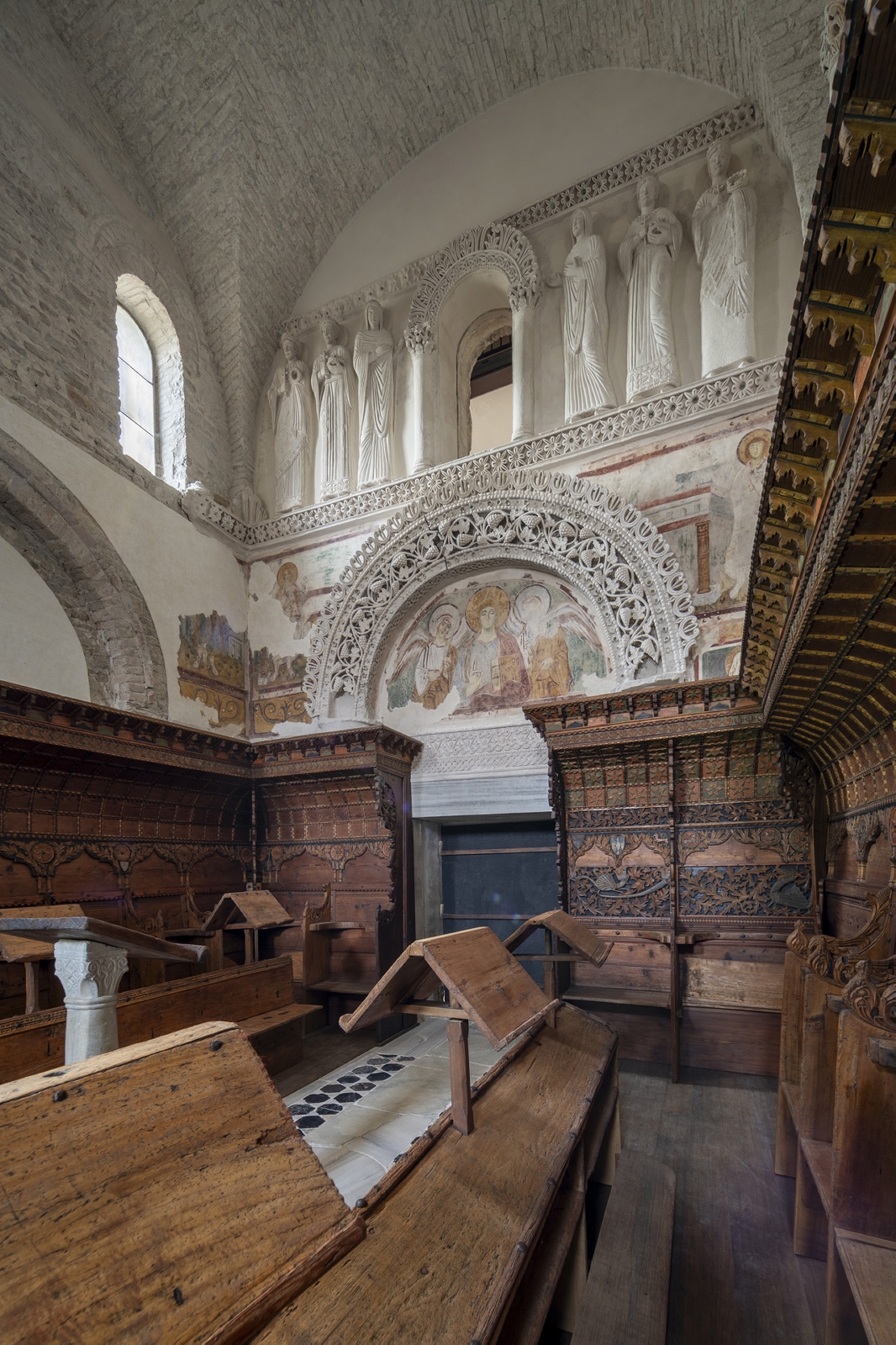
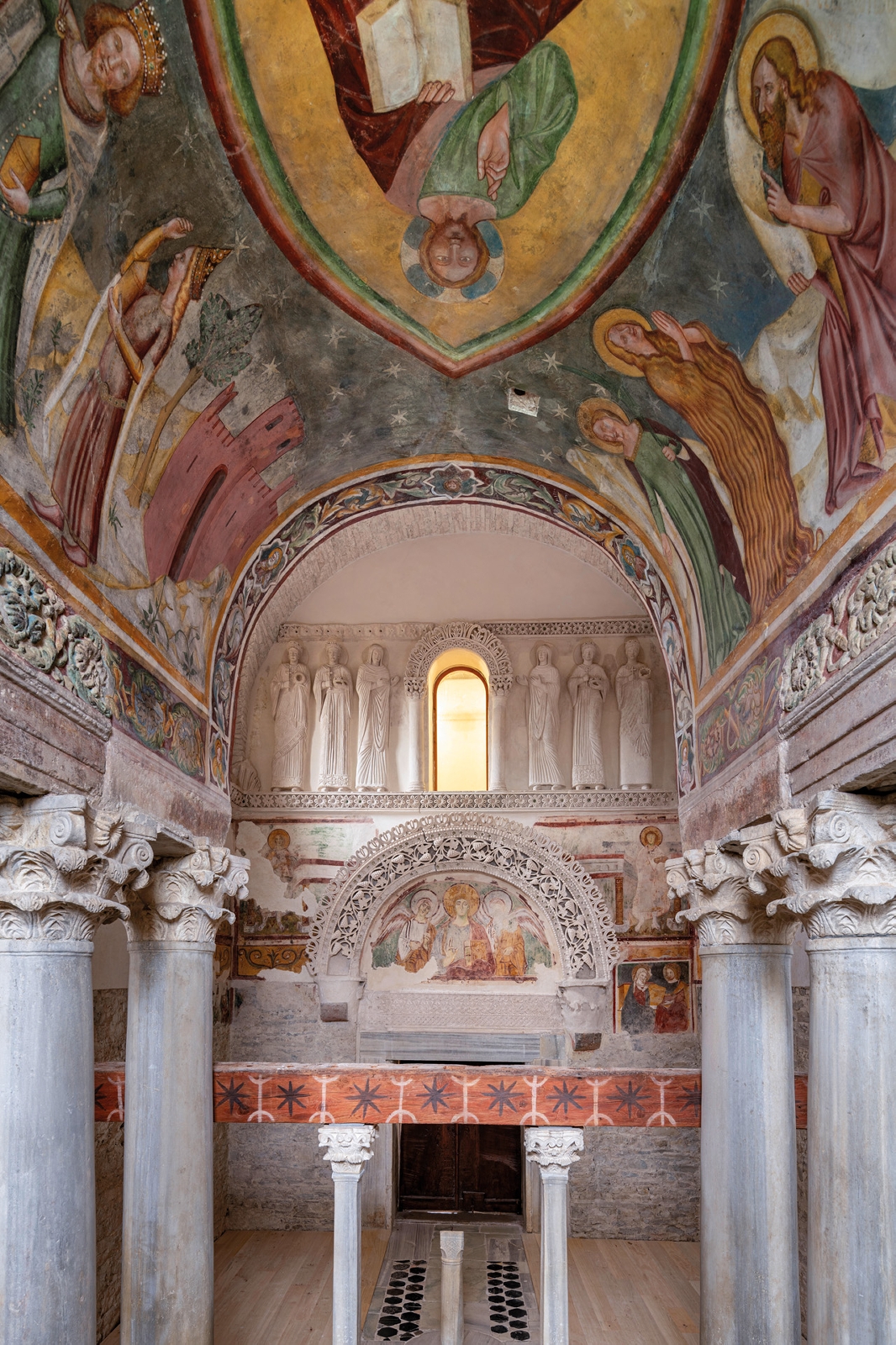
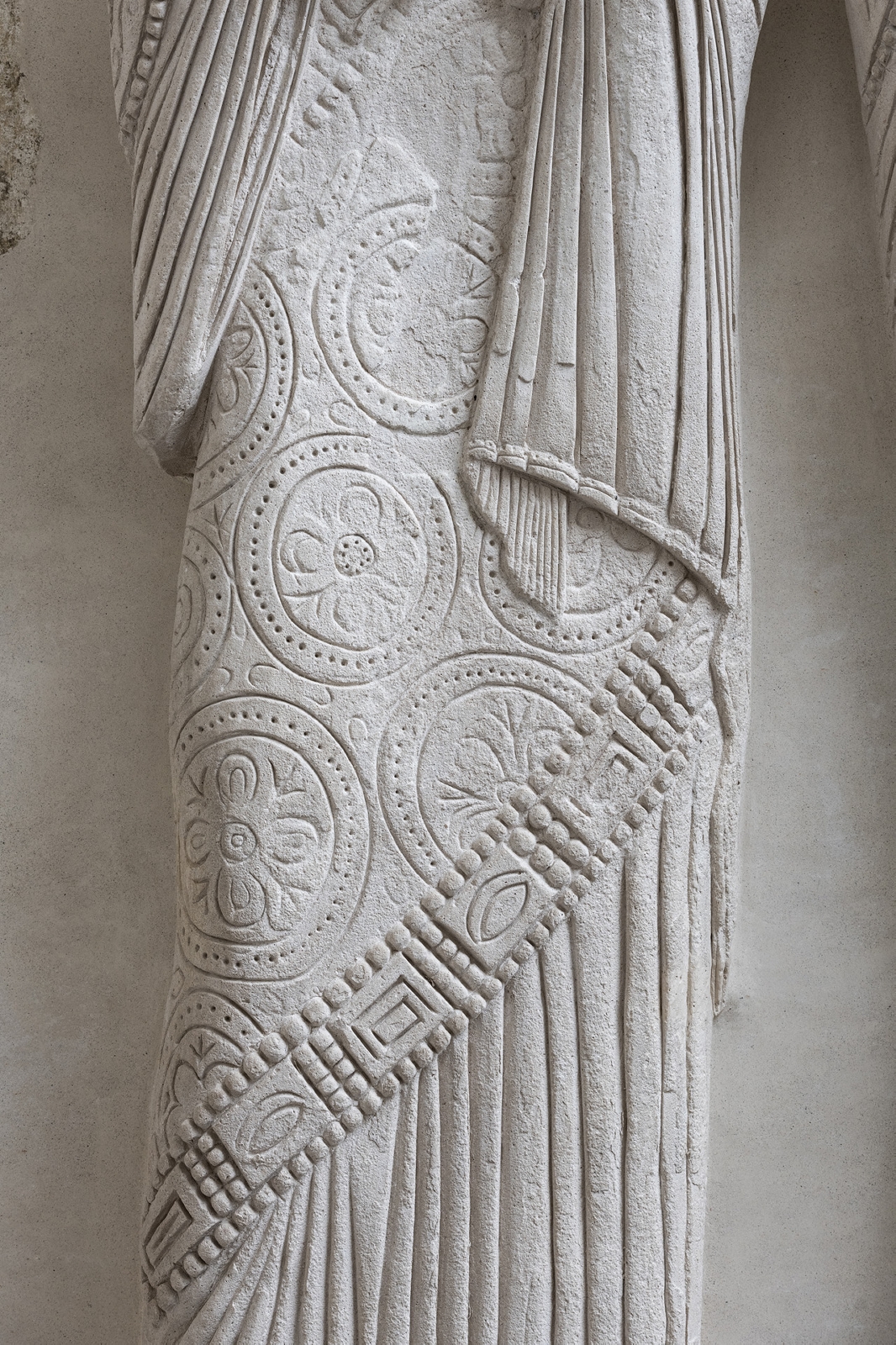
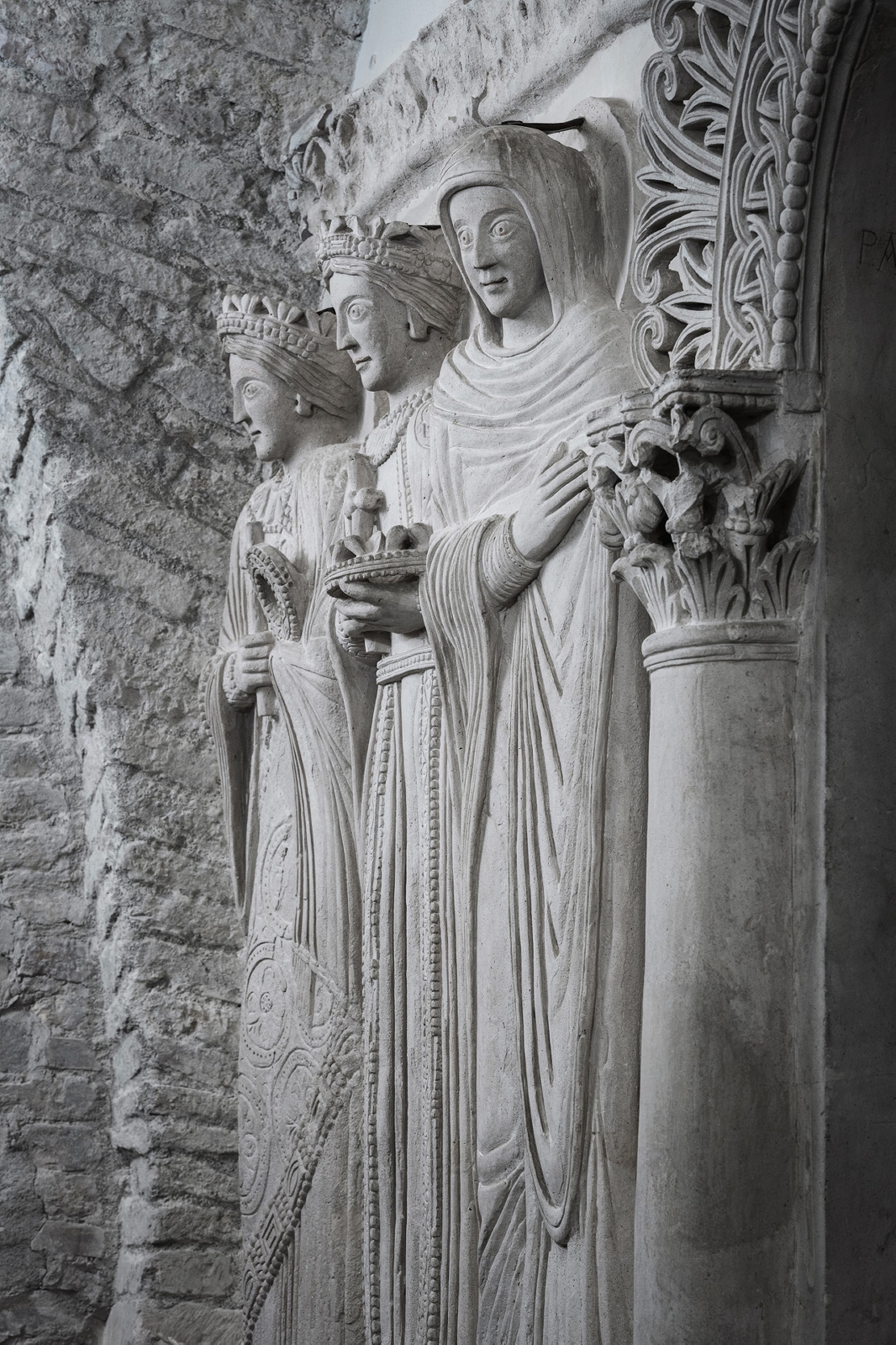
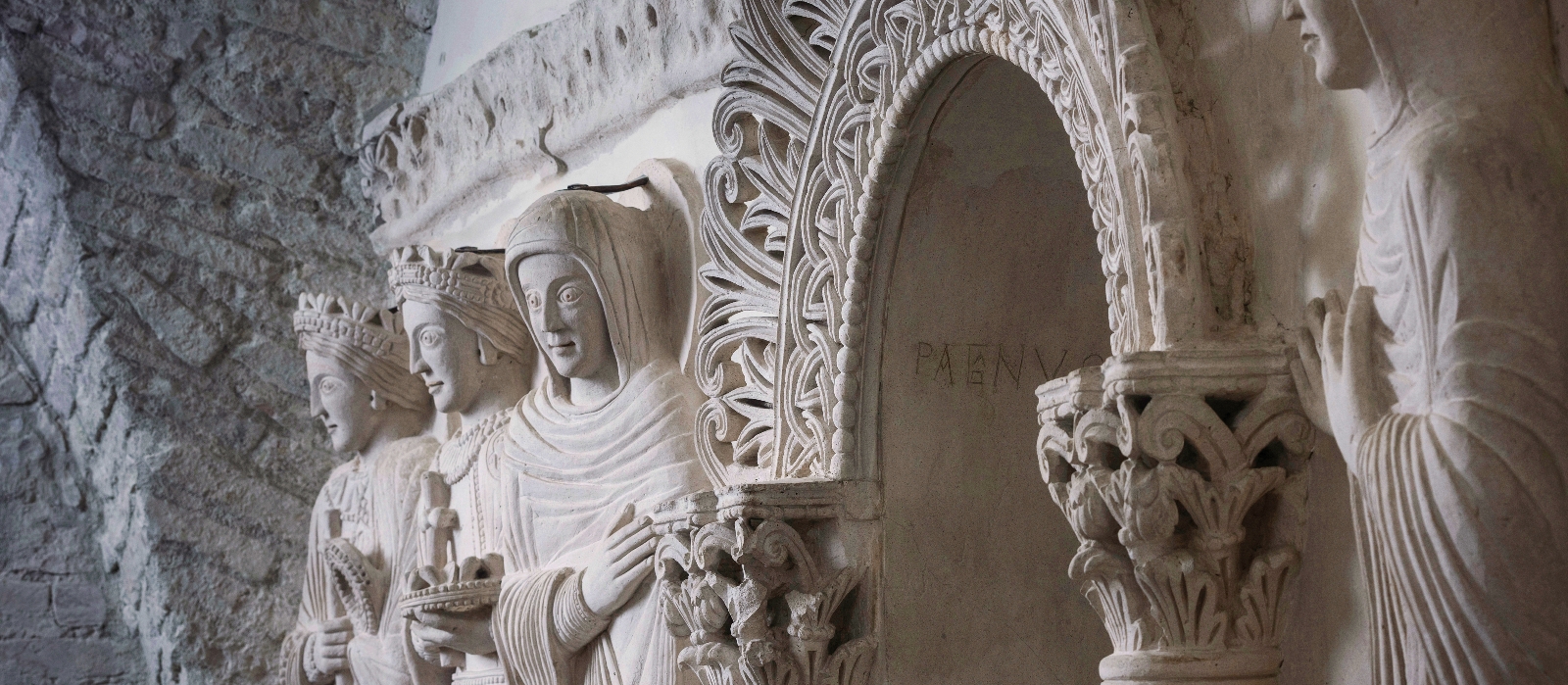
Beyond the entrance threshold, a small square hall, remarkably soaring in height and covered by a cross vault, offers a breathtaking first impression. Amid polychrome frescoes, decorative motifs and elegant stuccoes, six female statues rise prominently, nearly life-size in scale – one of the most magnificent and ambitious works of art that have survived from the 8th century.
Mysterious Female Figures
Hieratic and solemn, sculpted in high relief and almost life‑sized, the haloed statues might be a representation of six female saints, although their identification remains uncertain. It is likely that the group of artisans involved in creating the sculptures included skilled artisans and artists of Syrian/Palestinian origin. Gentle yet dignified, and still shrouded in mystery, these figures have made the Tempietto famous worldwide.
Amid Ancient Paintings and Decorations
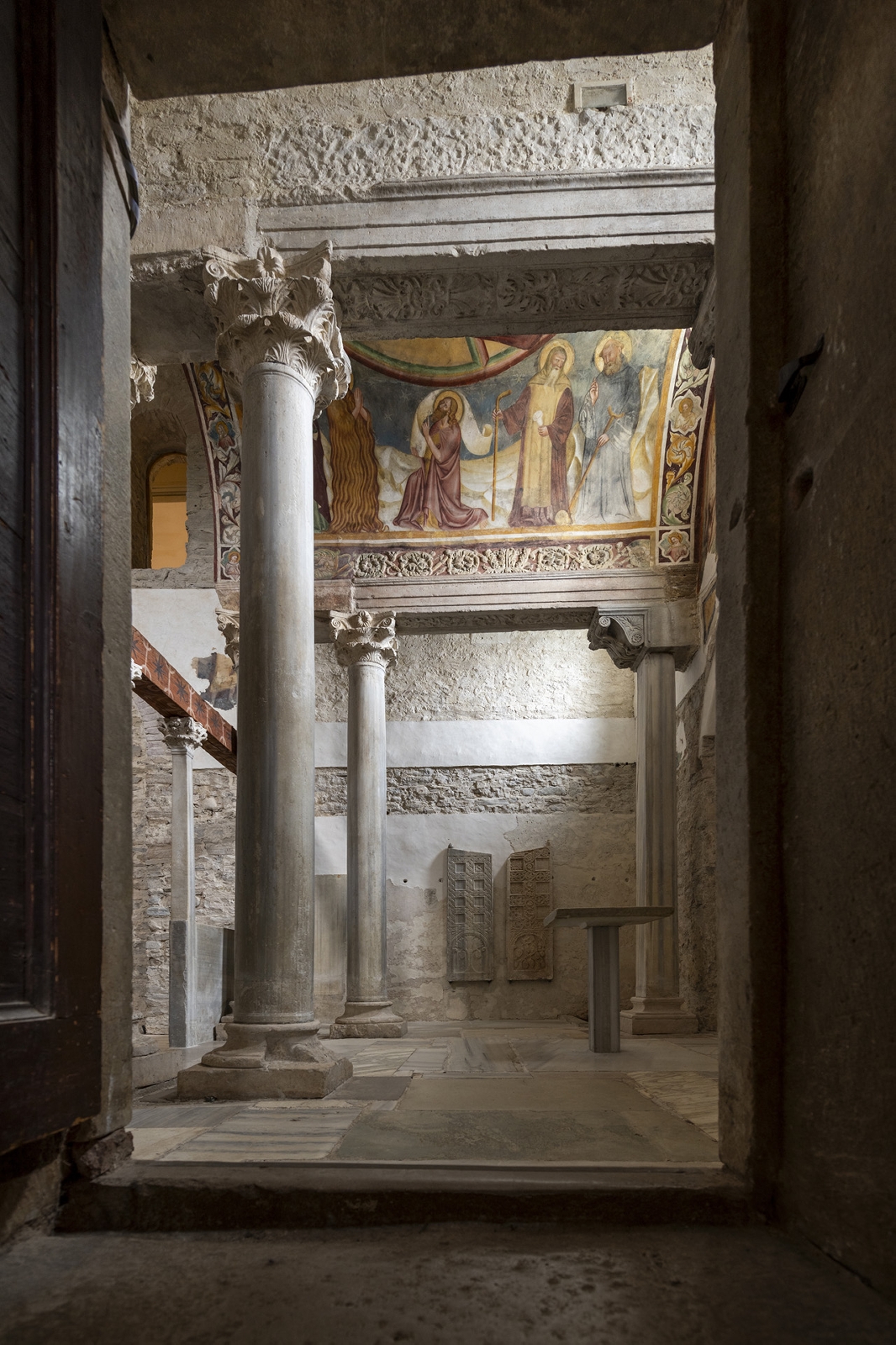
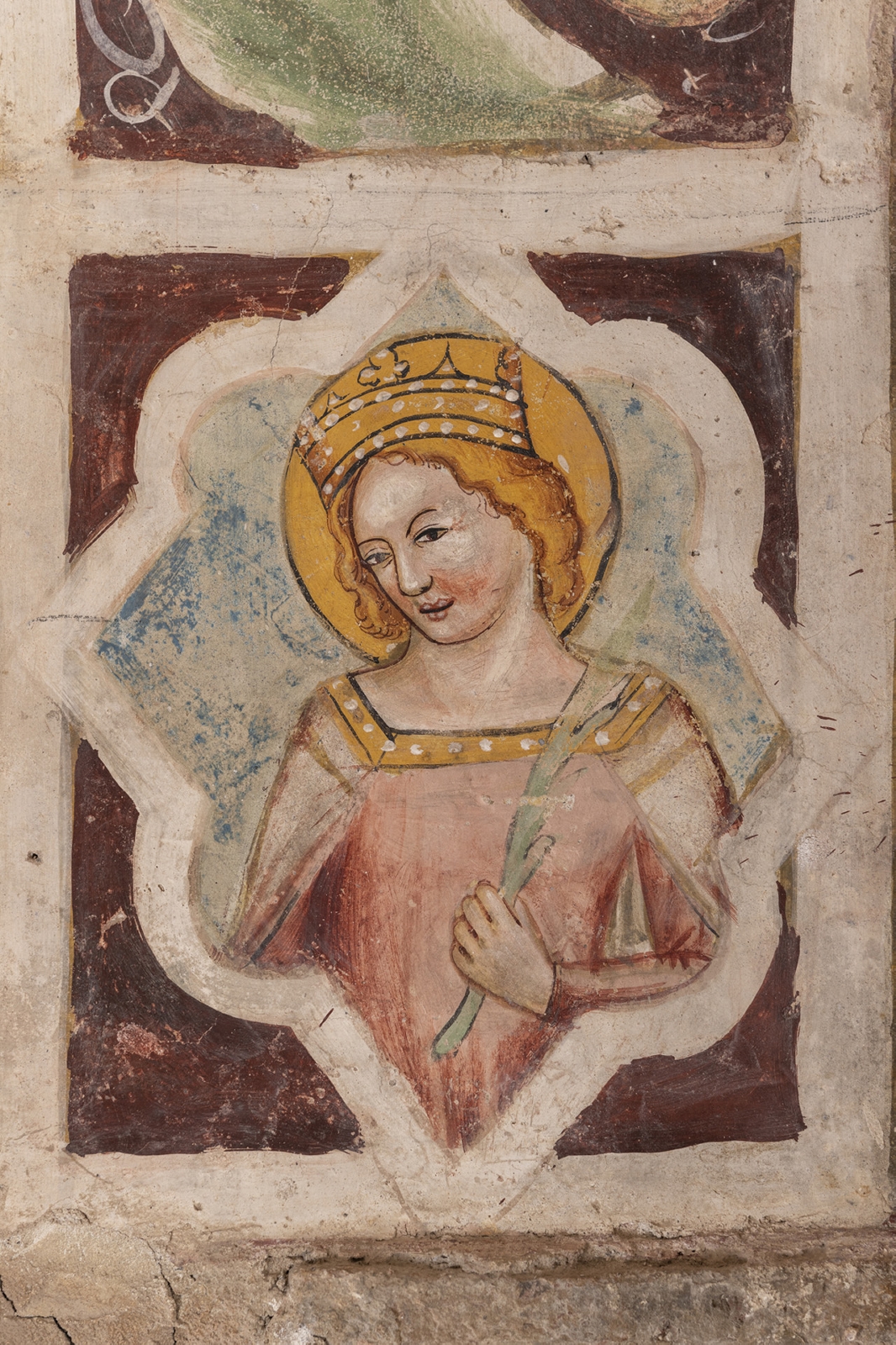
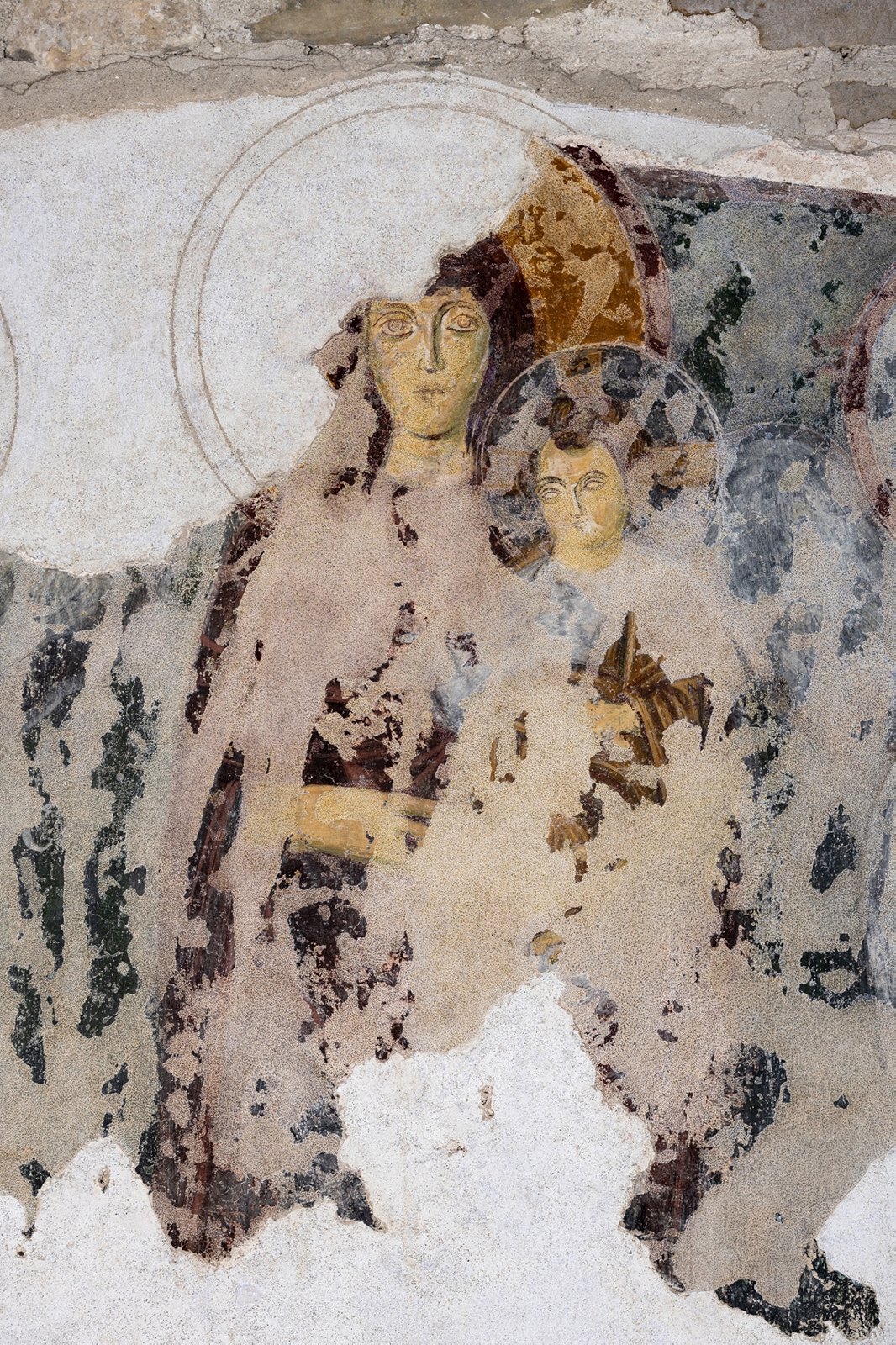
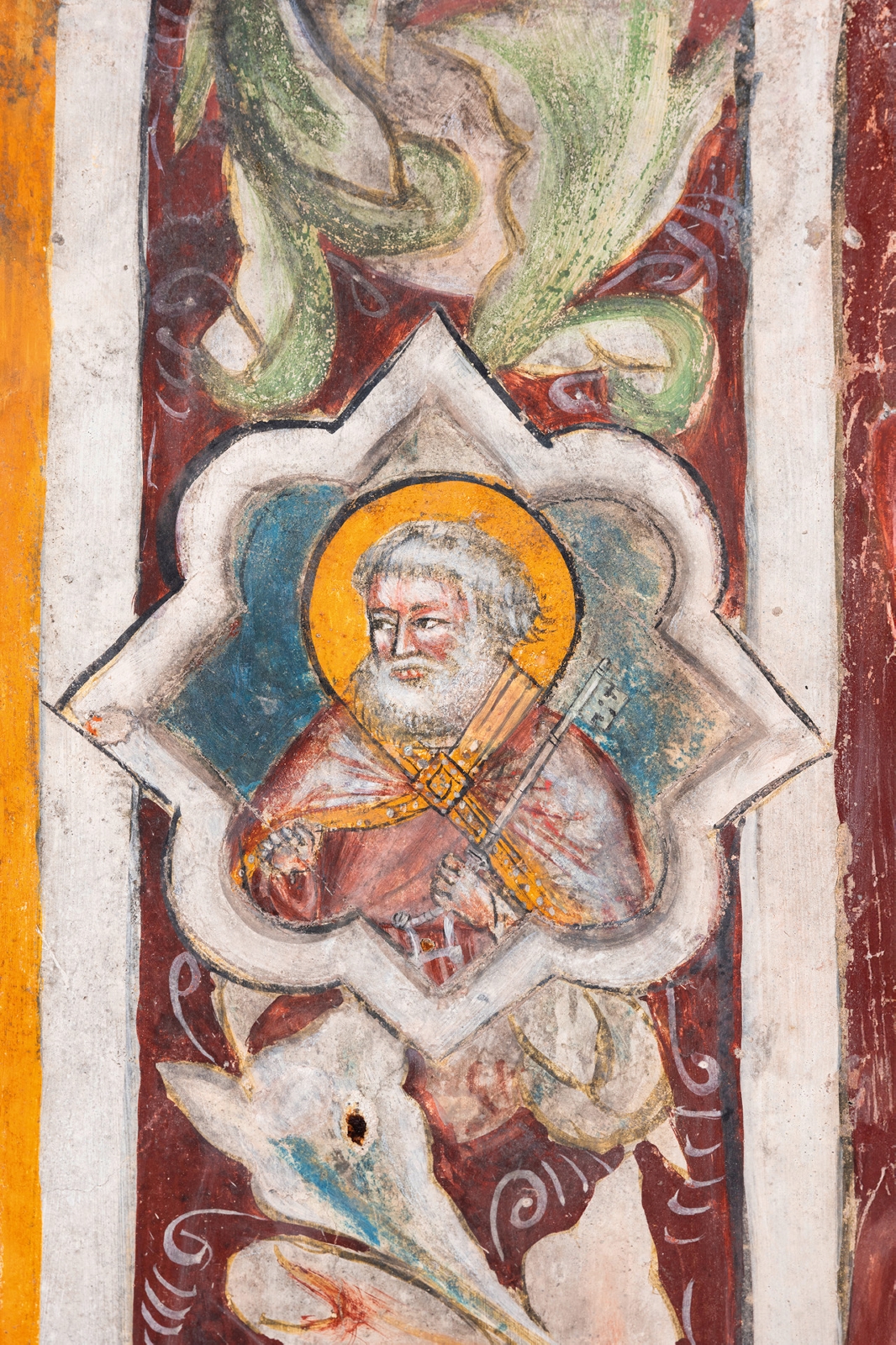
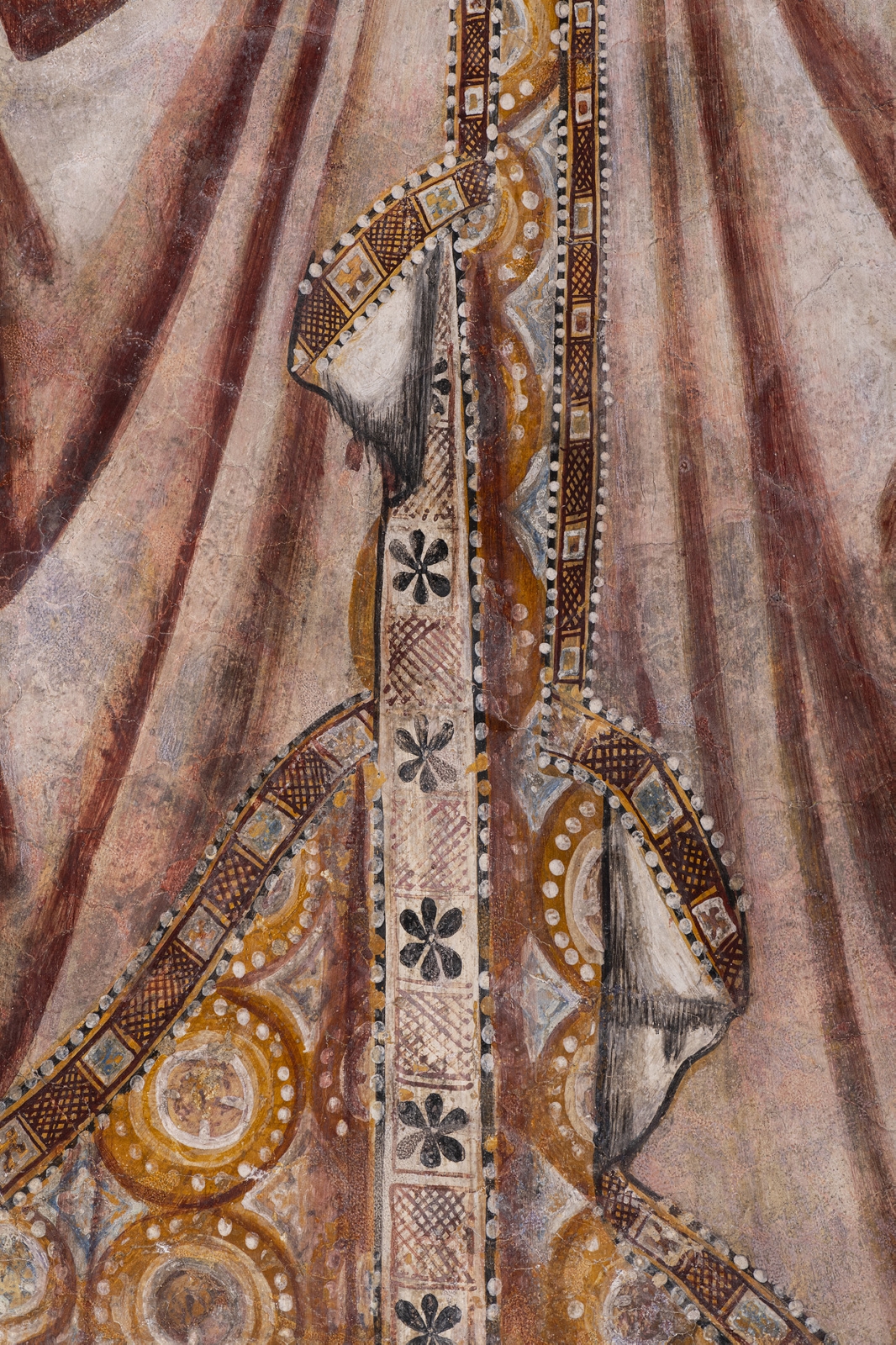
The fresco depicting Mary Magdalene and Saint Sophia with her daughters Faith, Hope, and Charity is of striking beauty. It is probably the oldest work in the Tempietto’s architectural complex from the Late Middle Ages, dating back to 12th-13th centuries. The four saints hold the palm of martyrdom in their right hand, while their left hand is open as a sign of witness – except for Hope, whose hand rests upon her chest as a sign of humility.
Gallery